Road to the Lines: A Home in the Heart of Gibraltar’s History
Economy | 21 Aug 26, 00:00
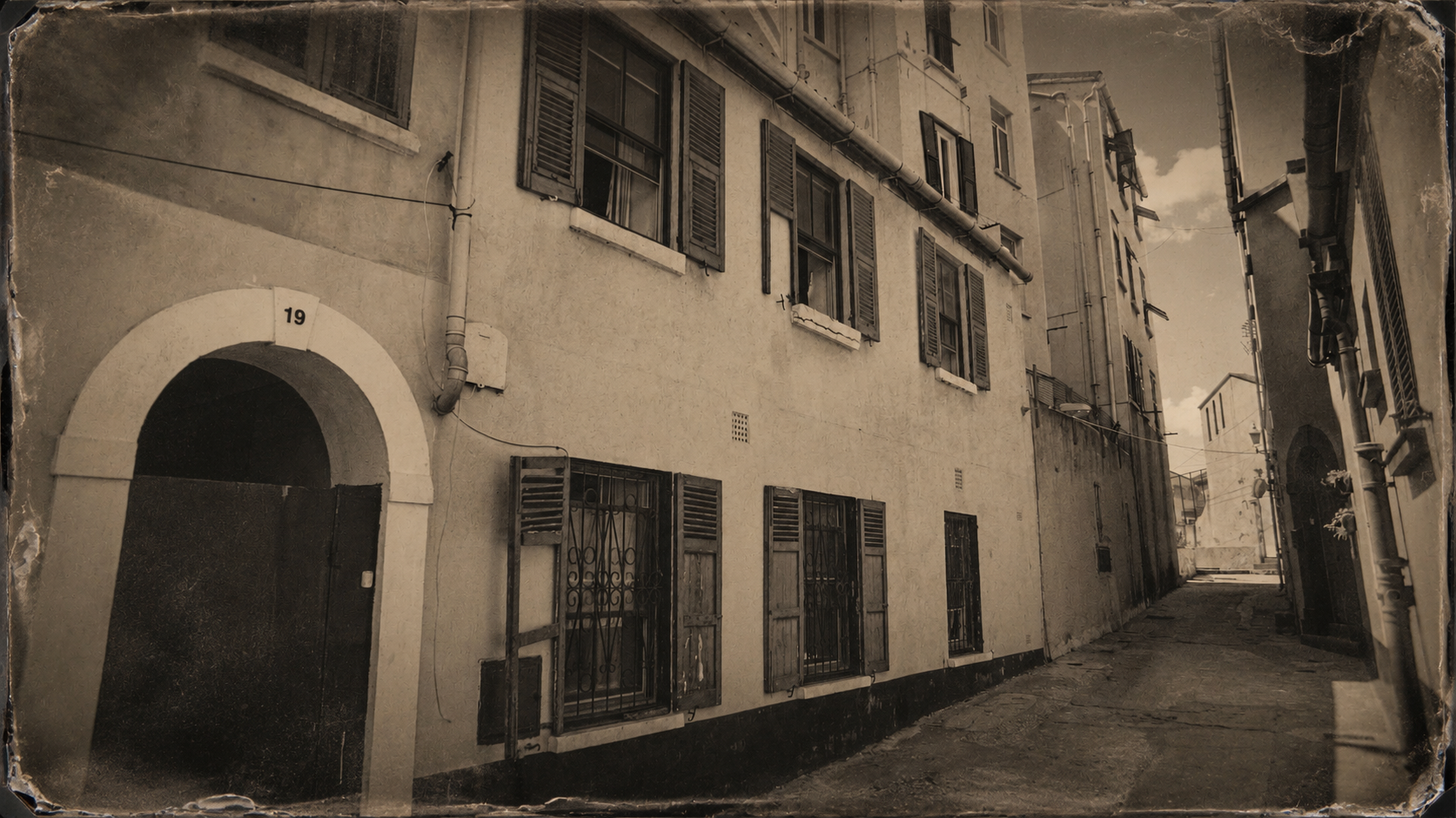
There are few places in Gibraltar where the layers of the Rock’s history feel quite as immediate as they do on Road to the Lines.
Tucked beneath the Moorish Castle and beside the Northern Defences, this distinctive corner of the Upper Town is a world of narrow passages, steps, old stone walls and characterful homes. It is easy to walk through today and see simply a quiet residential lane, but look a little closer and the surroundings reveal centuries of Gibraltar’s story - from the medieval settlement and Spanish period, through the development of the British fortress, to the lived-in community of later generations.
And today, one of those historic buildings presents an unusual opportunity: a former 19th-century shop building that has been transformed into a unique three-bedroom cottage, offering the chance to create a modern home within one of Gibraltar’s most historic neighbourhoods.
A road with a very literal name
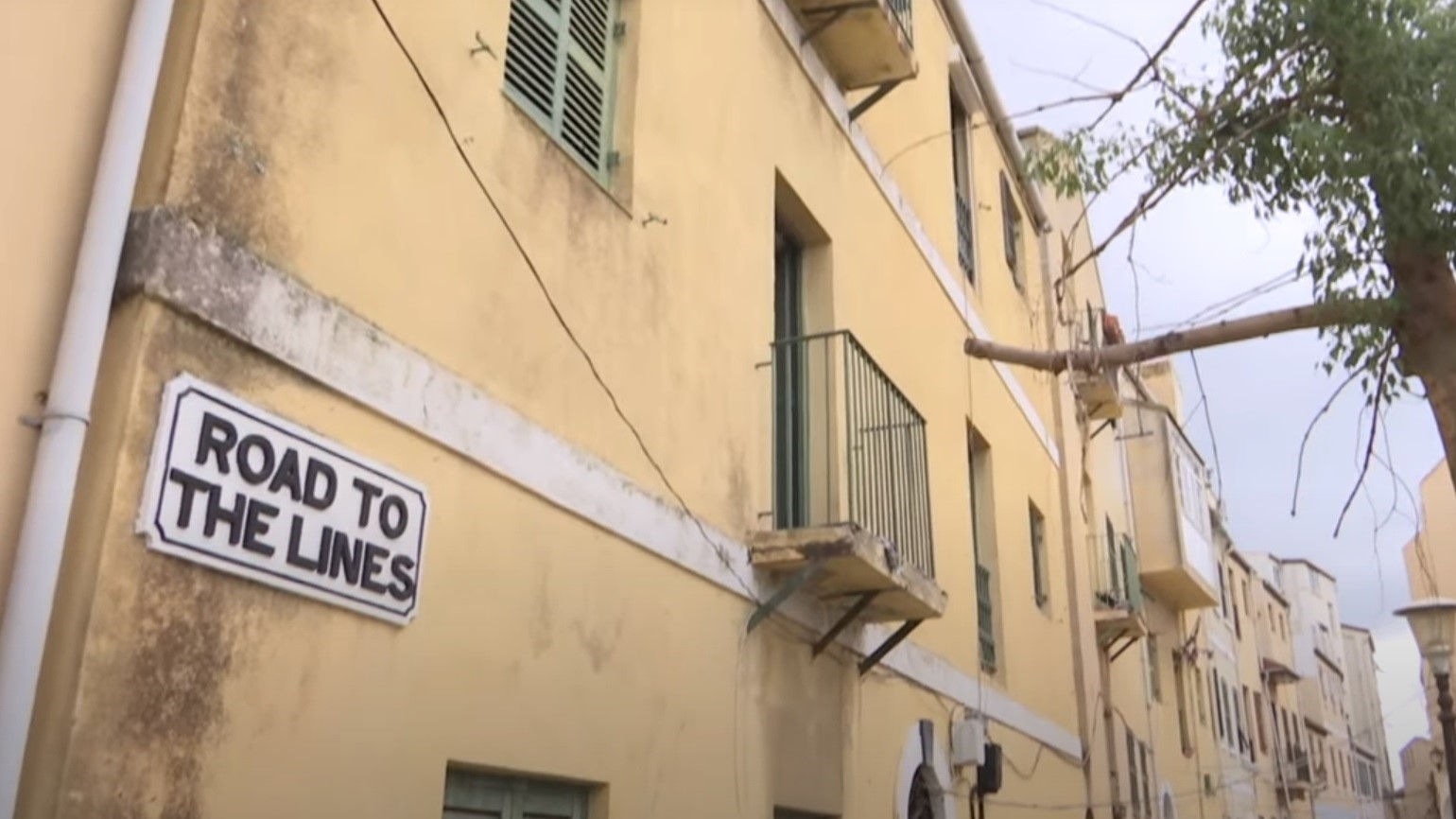
Road to the Lines is one of Gibraltar’s most evocatively named streets because its name describes exactly what it was built to do.
The road provided access towards the defensive lines, batteries and galleries that formed part of Gibraltar’s formidable northern defences. The Government has described the area as marking the point where civilian occupation historically reached the dividing wall between the civilian town and the military fortress.
Its Spanish name is even more atmospheric: Callejón Sin Sol, or “Alley Without Sun”. The name is officially recognised by Gibraltar’s Ministry for Heritage as the vernacular name for Road to the Lines, reflecting the narrowness of the lane and the way surrounding buildings and walls restricted the sunlight reaching it.
It is a wonderfully appropriate name. Even today, walking through this part of the Upper Town can feel like entering a different Gibraltar - quieter, enclosed and intimately connected to the Rock itself.
Before the Lines: Gibraltar’s old town
The history of the area goes back considerably further than the British fortifications that gave Road to the Lines its present identity.
The northern part of Gibraltar’s old town developed beneath the castle and around the slopes of the Rock. Over centuries, buildings, patios, lanes and passages grew around the existing defensive structures, producing the dense urban landscape that remains characteristic of the Upper Town.
The street network itself tells this story. Road to the Lines sits among Castle Ramp, Crutchett’s Ramp, Demaya’s Ramp, Parody’s Passage and other historic routes. The Gibraltar Heritage Trust still uses this network of lanes as the setting for walking tours exploring the northern Old Town and its history.
This is not a planned suburban neighbourhood in the modern sense. It evolved around the Rock, the castle and the needs of a compact fortified town.
That gives the area its distinctive character today: homes are tucked into spaces that were shaped by topography and defence rather than by modern ideas of roads, parking and spacious plots.
The fortress takes shape
Following the British capture of Gibraltar in 1704, the existing fortifications were occupied, renamed and progressively strengthened. Gibraltar’s strategic importance meant that the northern face of the Rock received particular attention because this was the direction from which an invading army could approach over the isthmus.
The Northern Defences developed into a complex system incorporating the King’s, Queen’s and Prince’s Lines, batteries, galleries, tunnels and other defensive positions. The Ministry for Heritage describes these northern works as among the key elements of Gibraltar’s landward defences.
The fortifications were repeatedly tested. Spanish sieges in 1704 and 1727 caused damage, after which the British repaired and strengthened the northern batteries. As the 18th century progressed, the engineering became increasingly sophisticated, with carefully constructed limestone walls and increasingly extensive underground works.
The result was an extraordinary military landscape immediately behind what became the civilian neighbourhood of Road to the Lines.
The road therefore acquired its identity not because it was an important commercial thoroughfare, but because it was a route from the inhabited town towards one of the most heavily defended parts of the fortress.
The Great Siege
The defining episode in the development of Gibraltar’s northern defences was the Great Siege of 1779–1783.
For almost four years, Gibraltar was subjected to a sustained Spanish and French attempt to recapture the Rock. The siege prompted further strengthening and development of Gibraltar’s defensive system, including the galleries, batteries and positions around the northern face.
The Northern Defences became a remarkable military engineering complex. Tunnels and galleries were cut directly into the limestone, while defensive positions were connected by passages and carefully positioned batteries.
Today, the Northern Defences are recognised as an extraordinary example of military engineering. Government restoration work has described the area as an interconnected network of tunnels, vaults, batteries and galleries dating principally from the 18th century.
For residents of Road to the Lines, these extraordinary fortifications were quite literally part of the neighbourhood.
The massive walls that rise around the houses were not merely historic monuments. They were functional pieces of a fortress that played a central role in Gibraltar’s survival.
A living neighbourhood
Yet Road to the Lines was never simply a military zone.
The dividing wall between the military and civilian areas became an important boundary, with civilian occupation extending right up to the fortifications. Over time, the narrow passages around the Lines became a residential community, with houses and small businesses occupying buildings adapted to the unusual spaces available.
That history helps explain why the area feels so different from the more conventional streets of Gibraltar’s town centre.
Here, houses are closely packed together. Steps replace conventional pavements in places. Buildings meet historic walls. Passages suddenly open into small courtyards or turn towards another ramp.
The result is a neighbourhood that feels almost Mediterranean in character, while simultaneously being unmistakably Gibraltarian.
It is also a reminder of how previous generations made use of every available piece of land on the Rock.
From shop to home
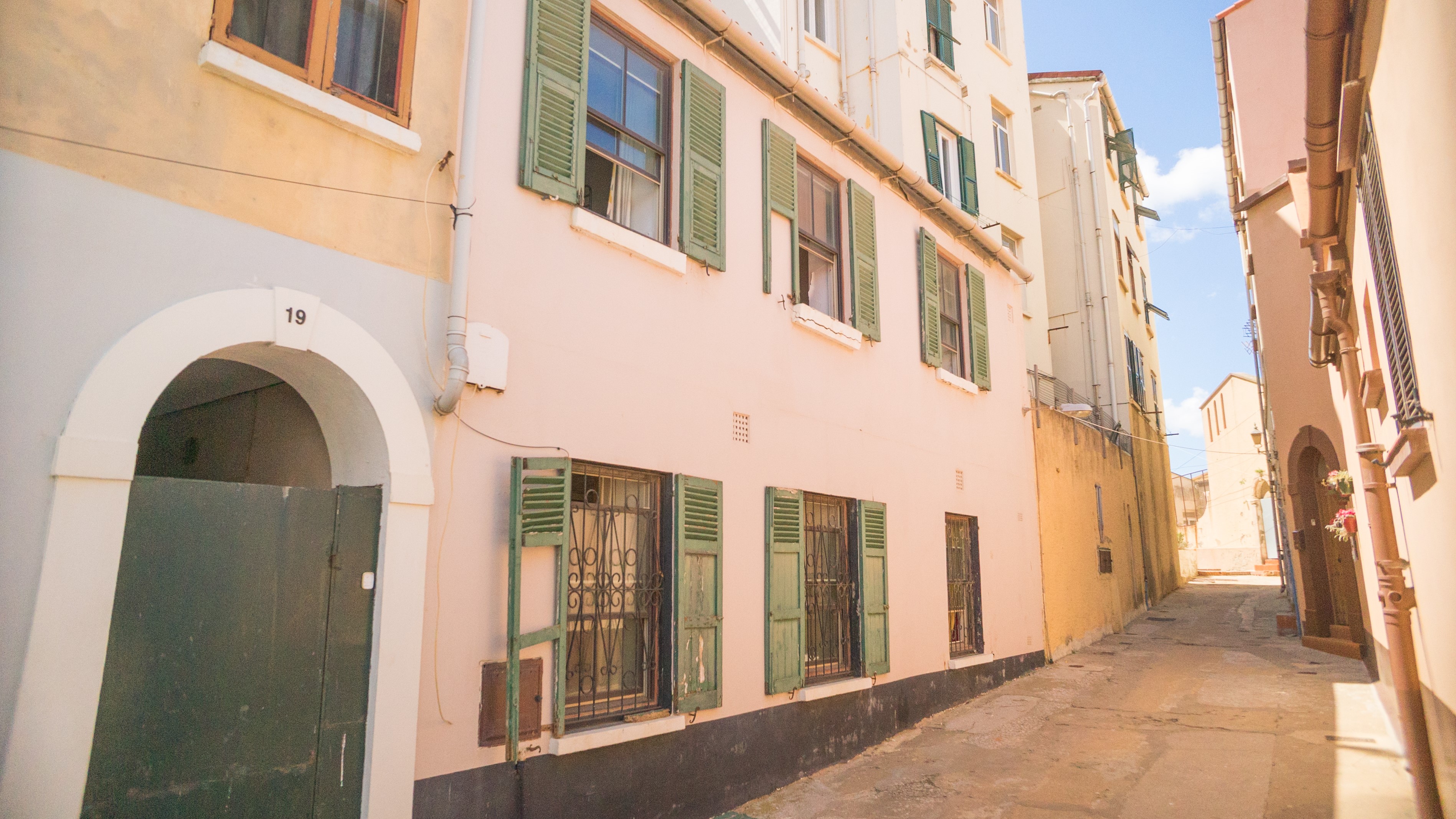
It is within this extraordinary setting that the property currently being offered for sale exclusively by Richardsons Properties provides such an interesting opportunity.
View the property on Richardsons Properties
The building is understood to date from the 19th century and was originally used as a shop before being converted into a residential property. Today it has become a highly individual three-bedroom cottage - a home whose character comes not from a modern developer’s attempt to recreate history, but from the fact that it has genuinely been part of the historic fabric of this part of Gibraltar.
The property offers approximately 85 square metres of internal accommodation, with three bedrooms and two bathrooms. It does require refurbishment, but that is precisely where much of its appeal lies: this is an opportunity for a purchaser to take an unusual historic building and shape it into a home for the next generation.
The existing layout provides the foundations for a practical family home, while the building itself offers something that is increasingly difficult to find in Gibraltar - individuality.
There is no sense of living in a standard apartment block here.
Instead, there is the possibility of owning a property with a story.
A neighbourhood being rediscovered
For many years, the very characteristics that make Road to the Lines special also contributed to its decline.
Its narrow streets, difficult access and ageing infrastructure made refurbishment challenging. As modern homes elsewhere in Gibraltar offered easier access and other conveniences, parts of the Upper Town lost residents and some properties became neglected.
Government documents have acknowledged that Road to the Lines suffered from decades of deterioration, poor infrastructure and difficult access.
But that story is changing.
The Northern Defences have undergone extensive restoration and clearance after years of neglect. Once known locally as “the Jungle”, the area has increasingly been opened up as a heritage and recreational space, with walking routes and remarkable views across the isthmus and towards Spain.
At the same time, Road to the Lines itself has become the focus of major regeneration ambitions.
Plans have included the refurbishment of buildings, improvements to infrastructure, better accessibility and the creation of new residential and commercial spaces. The Government has described the objective as bringing life back into this historic quarter while retaining its distinctive character.
That makes the timing particularly interesting for someone considering a property here.
Old Gibraltar, right on the doorstep
One of the property's greatest advantages is not something that can be measured in square metres.
It is location.
Road to the Lines sits only around 250 yards from Casemates Square, placing the property within easy reach of the cafés, restaurants, shops and everyday amenities of Gibraltar's town centre.
At the same time, step in the opposite direction and you are surrounded by the Northern Defences and the historic landscape of the Upper Rock.
Few residential locations can offer such a contrast.
One moment you are close to the energy of Casemates and the town centre; the next you are walking beside centuries-old fortifications, looking across towards Spain and tracing routes through Gibraltar's military past.
For someone who values character and centrality, it is a compelling combination.
A project with a story
Renovation projects are not for everyone. A property that needs work inevitably requires imagination, patience and an appreciation of what can be created rather than simply what is there today.
But that is also what makes this particular home interesting.
The purchaser is not simply buying an older house and renovating it. They are taking responsibility for a small piece of Gibraltar's built heritage and giving it another chapter.
A former 19th-century shop, transformed into a three-bedroom cottage, sitting beside the defensive landscape that helped make Gibraltar famous, is about as far removed from anonymous modern housing as it is possible to get.
And while the property will require investment to realise its full potential, its central location, existing three-bedroom configuration and position within an area undergoing significant renewal make it an intriguing proposition for a buyer prepared to take on a project.
A piece of Gibraltar to make your own
Road to the Lines tells the story of Gibraltar particularly well.
It is a place where the military and civilian histories of the Rock meet. Medieval lanes sit beside British fortifications. Historic walls form the backdrop to homes. A road named for the defensive Lines became a residential street, while buildings that once served the everyday needs of the community have been adapted for modern life.
Today, that process continues.
The neighbourhood is being rediscovered and renewed, while its unusual character remains intact.
For the right buyer, this three-bedroom cottage offers the opportunity to become part of that story - to restore an individual home, make it comfortable for contemporary life and, in doing so, preserve something of the character that makes the Upper Town so distinctive.
In a property market where new homes can often feel interchangeable, this is something different.
It is a home with a past, a project with potential and a location with a story that reaches back centuries.
For sale at £330,000, this unique three-bedroom terraced cottage on Road to the Lines offers approximately 85m² of internal accommodation, two bathrooms and a rare opportunity to create a bespoke home in the heart of Gibraltar's historic town. The property is leasehold to 2099 and is currently in need of refurbishment.
For anyone looking not merely for a home in Gibraltar, but for a slice of Gibraltar's history to call their own, it is an opportunity worth exploring.