H1 2026 Gibraltar Property Market Report
Economy | 29 Jun 26, 00:00
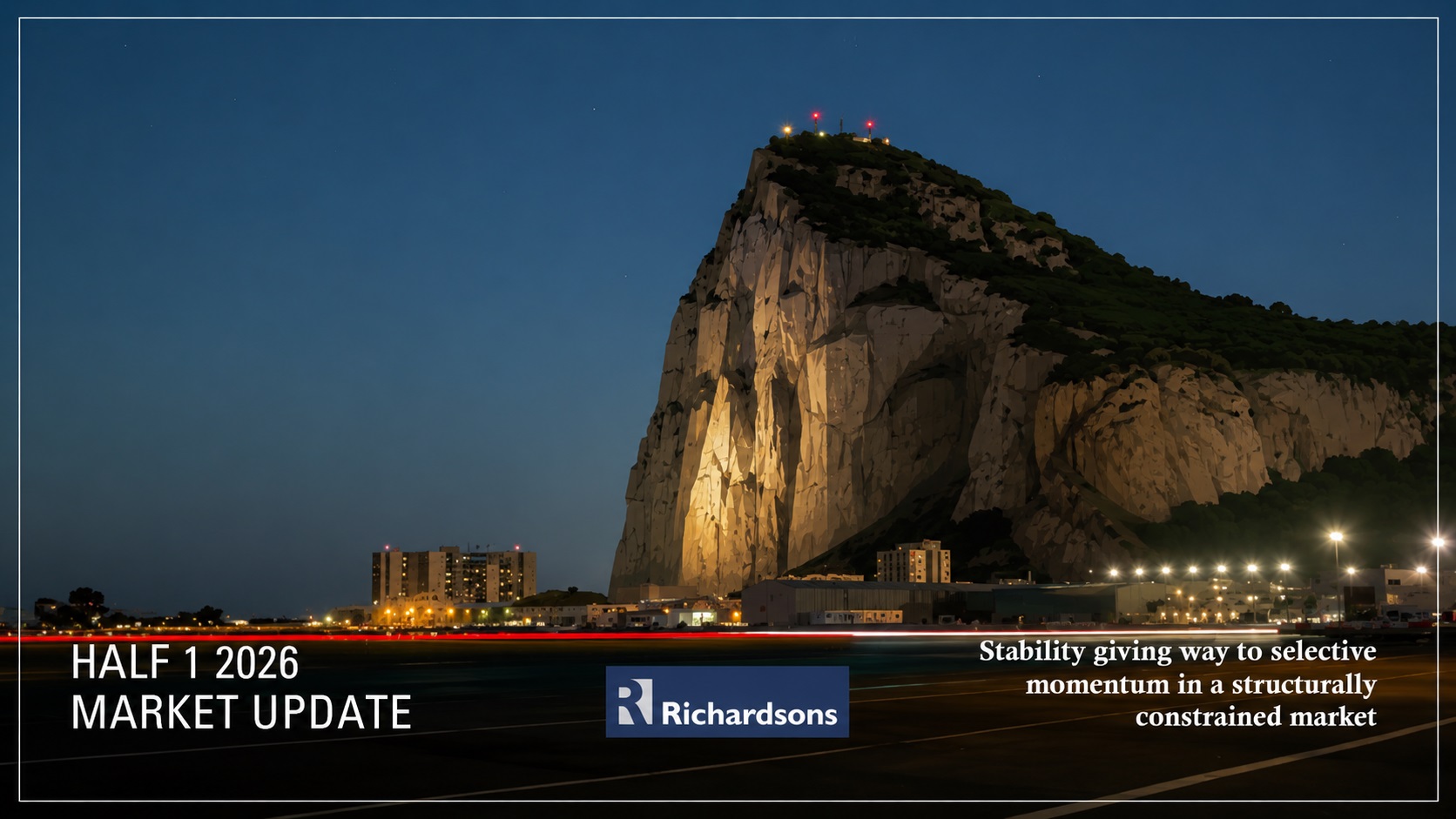
If the first half of 2025 was characterised by recovery, then the first six months of 2026 have been about something arguably more important: stability.
Despite continued economic uncertainty across Europe, fluctuating interest rates and a more cautious international investment landscape, Gibraltar's residential market has remained remarkably resilient. Transaction levels have eased slightly compared with the same period last year, but the market has been far from quiet. Instead, we've seen a shift in who is driving activity.
The Local Market Takes Centre Stage
Perhaps the biggest story of H1 2026 has been the strength of Gibraltar's Local Market.
Rather than relying on overseas investors to underpin values, much of the activity we've handled this year has come from local buyers upgrading, downsizing or moving to suit changing lifestyles. That creates a very different market dynamic. Instead of speculative purchasing, we're seeing genuine housing demand.
Families looking for additional space, professionals buying their first home and existing homeowners making their next move have all contributed to a market that has continued to function with confidence.
For prospective investors, that's an encouraging sign. Markets supported by owner-occupiers tend to be more resilient during periods of wider economic uncertainty.
A More Balanced Market
Compared with H1 2025, buyers are taking a little longer to make decisions.
That doesn't mean demand has disappeared - it simply means purchasers have become more selective. Buyers are viewing more properties, asking more questions and expecting pricing to reflect current market conditions.
The result has been a healthier balance between buyers and sellers.
Properties that are realistically priced continue to attract excellent interest and, in many cases, competitive offers. Those entering the market with unrealistic expectations often require price adjustments before securing a sale.
In many respects, this is exactly what a mature property market should look like.
Westside Leads the Way
One of the more noticeable shifts during the first half of the year has been where activity has been concentrated.
Westside has emerged as one of the busiest parts of the market, with consistent demand across a variety of property types. Good transport links, established residential developments and competitive pricing continue to make it attractive for local purchasers.
Meanwhile, the South District has once again demonstrated why it remains one of Gibraltar's most sought-after residential locations. Quality family homes continue to generate strong interest whenever they become available.
The Upper Town has maintained a steady level of activity, particularly as buyers continue to recognise the value available in character properties and refurbished homes.
Perhaps the biggest change has been within the Town Area, where activity has been noticeably quieter than during the same period last year. This appears to be less about demand disappearing and more about a shortage of suitable stock coming to market.
Investors Remain Active - But More Selective
International investors continue to view Gibraltar positively, although buying behaviour has evolved.
Where investors may once have prioritised rapid capital growth, today's purchasers are increasingly focused on long-term fundamentals: rental demand, tenant quality, management costs and future resale prospects.
That cautious approach has inevitably lengthened decision-making, but well-positioned investment properties continue to attract attention.
With Gibraltar's limited land supply and consistently strong rental sector, the longer-term investment case remains compelling.
Stock Levels Continue to Shape the Market
One of the recurring themes throughout H1 has been the ongoing shortage of quality stock.
The best-presented homes rarely remain available for long, particularly where pricing reflects current market conditions.
As a result, buyers are often waiting for the right property rather than simply the next available one.
This imbalance between quality supply and underlying demand has helped support values, even as overall transaction numbers have moderated.
What Does This Mean for the Second Half?
Looking ahead, we expect many of the current trends to continue.
The Local Market is likely to remain the primary engine of activity, with overseas purchasers providing additional support rather than driving the market outright.
Provided inflation and interest rates continue to stabilise, confidence should gradually improve as we move into the second half of the year.
We also anticipate continued demand for well-priced family homes, modern apartments and investment properties in established developments, while sellers who enter the market with realistic expectations should continue to achieve successful outcomes.
Final Thoughts
If H1 2026 has demonstrated anything, it's that Gibraltar's property market has matured.
Rather than depending on short-term investment cycles or speculative demand, the market is increasingly being supported by people choosing to live, work and invest in Gibraltar for the long term.
That's exactly the type of foundation that creates sustainable growth.
From our position advising buyers and sellers across every segment of the market, we're encouraged by what we've seen so far this year. Activity remains healthy, confidence is improving and, while the pace may be more measured than previous years, the fundamentals of Gibraltar property remain as strong as ever.