Gibraltar's House Building Periods
Economy | 09 Mar 26, 00:00
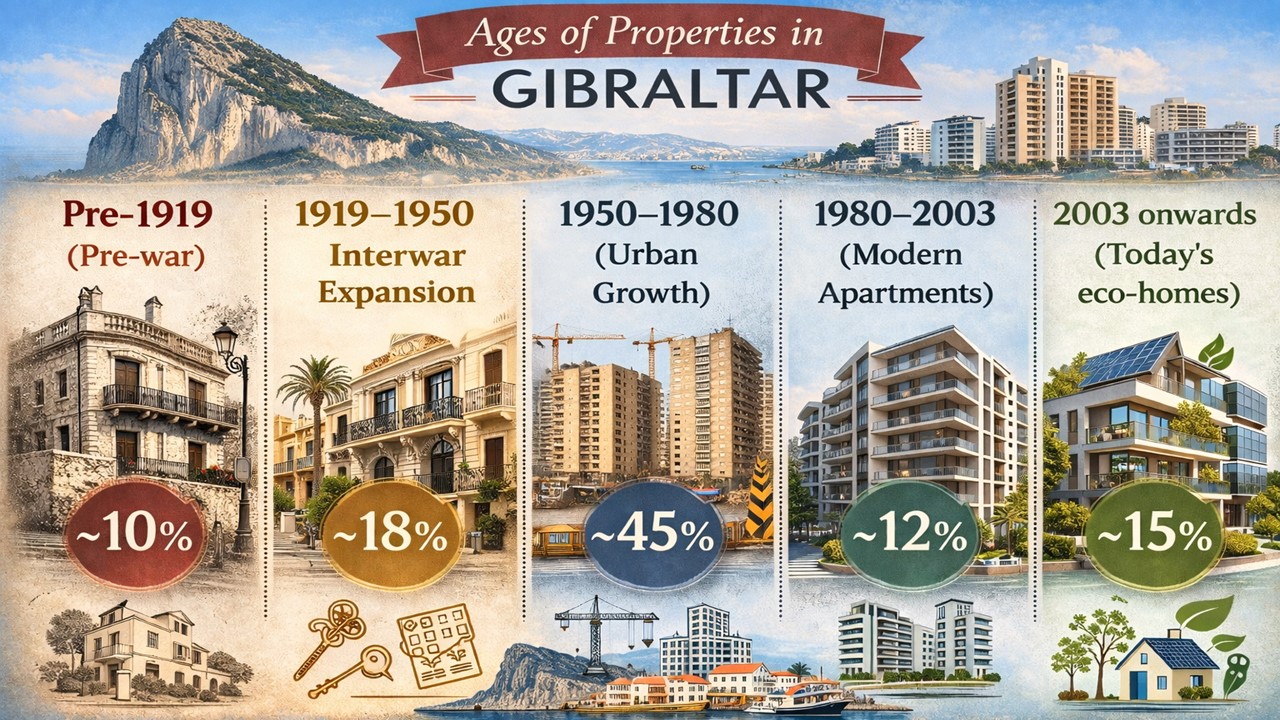
Gibraltar may be small in size, but its property market tells a remarkably rich story. Over the decades, the Rock has developed layer by layer, with homes built during very different historical periods sitting side by side. Walk through the Upper Town and you will see traditional pre-war houses; visit the reclaimed waterfronts and you will find sleek modern apartment towers. This blend of architecture and history means that buyers and investors in Gibraltar benefit from an unusually diverse housing stock for such a compact territory.
Today there are approximately 14,530 residential dwellings in Gibraltar, according to the latest census data published by the Chronicle. Despite the limited land available, the housing supply has grown steadily in recent decades, with thousands of new homes added through redevelopment projects and land reclamation.
What makes Gibraltar’s housing particularly interesting is the wide variety in the age and style of properties available. From historic stone buildings to contemporary eco-friendly apartments, each era of development reflects the needs and ambitions of the time in which it was built.
Pre-1919: Gibraltar’s Historic Homes (Approx. 10%)
Roughly 10% of Gibraltar’s housing stock dates from before 1919. These pre-war homes are among the most characterful properties on the Rock. Often found in areas such as the Upper Town or older central streets, these properties typically feature traditional stone construction, high ceilings, balconies, and architectural details reflecting Gibraltar’s Mediterranean and British influences.
Many of these homes were originally built for military personnel, merchants, or long-established local families. While some have been modernised internally, they still retain historic charm that is difficult to replicate in newer buildings. For buyers seeking character and heritage, these properties offer a rare opportunity to own a piece of Gibraltar’s history.
✅ A great example is this stunning freehold house in Boschetti's Steps dating from the mid 1800s
1919–1950: Interwar Expansion (Approx. 18%)
Following the First World War, Gibraltar experienced an interwar period of expansion, accounting for around 18% of the current housing stock. Properties built during this period often reflect a blend of traditional and early modern architectural styles.
These homes are generally larger than later apartments and may include townhouses or low-rise buildings with generous balconies, courtyards, and decorative façades. Many properties from this era have since been renovated, making them appealing for buyers who want character combined with modern comforts.
✅Check out this typical 1950s Art Deco inspired apartment in Trafalgar House
1950–1980: Post-War Urban Growth (Approx. 45%)
The largest portion of Gibraltar’s housing - approximately 45% - was built between 1950 and 1980. This period followed the Second World War and saw a major push to address housing shortages.
Large apartment blocks and government housing developments were constructed to accommodate the growing population and changing social needs. Many of these buildings are still home to thousands of residents today.
While these properties were often designed with practicality in mind rather than aesthetics, they typically offer spacious interiors and strong structural construction. As a result, many have been refurbished or upgraded over time, making them attractive options for buyers looking for well-located homes at competitive prices.
✅ One of Gibraltar's 'New dawn' developments on the Marina in Neptune House
1980–2003: The Rise of Modern Apartments (Approx. 12%)
From the 1980s onwards, Gibraltar saw a shift toward more modern residential developments. Approximately 12% of homes were built between 1980 and 2003, reflecting the start of a more contemporary property market.
Developments from this period often include purpose-built apartment complexes with improved layouts, lifts, parking facilities, and communal amenities. These properties were designed with modern living standards in mind and continue to be popular with both local buyers and investors.
✅ Modern suburbia inspired cul de sac living in Europa Mews
2003 Onwards: Contemporary and Eco-Friendly Living (Approx. 15%)
The most recent phase of development represents around 15% of Gibraltar’s housing stock, built from 2003 onwards. These homes showcase the newest trends in architecture, sustainability, and urban design.
Many of these developments are located on reclaimed land or in newly regenerated areas and include luxury apartment towers, waterfront properties, and energy-efficient homes. Features such as smart technology, solar panels, improved insulation, and premium amenities have become increasingly common.
For investors and buyers seeking modern design and lifestyle facilities - such as pools, gyms, concierge services, and marina views - these developments are among the most sought-after on the market.
✅One of today's 'eco homes'in Arengo's Gardens
A Property Market with True Variety
The mix of historic houses, mid-century apartments, and contemporary developments makes Gibraltar’s property market unique. Within just a few square kilometres, buyers can choose between:
-
Historic townhouses with original character
-
Renovated interwar homes
-
Spacious post-war apartments
-
Modern residential complexes
-
Luxury waterfront developments
This variety means that Gibraltar offers something for almost every type of buyer, whether they are looking for heritage charm, investment potential, or modern coastal living.
Looking Ahead
With demand remaining strong and land availability limited, the future of Gibraltar’s housing market will likely continue to involve a mix of regeneration, redevelopment, and innovative design.
What remains constant, however, is the remarkable diversity of the housing stock. From buildings over a century old to cutting-edge eco-homes, Gibraltar’s property market reflects the territory’s rich history and its forward-looking future.
For buyers, investors, and residents alike, this blend of old and new is part of what makes owning property on the Rock so distinctive.