Clarifying the New Transaction Tax in Gibraltar
Economy | 12 Mar 26, 00:00
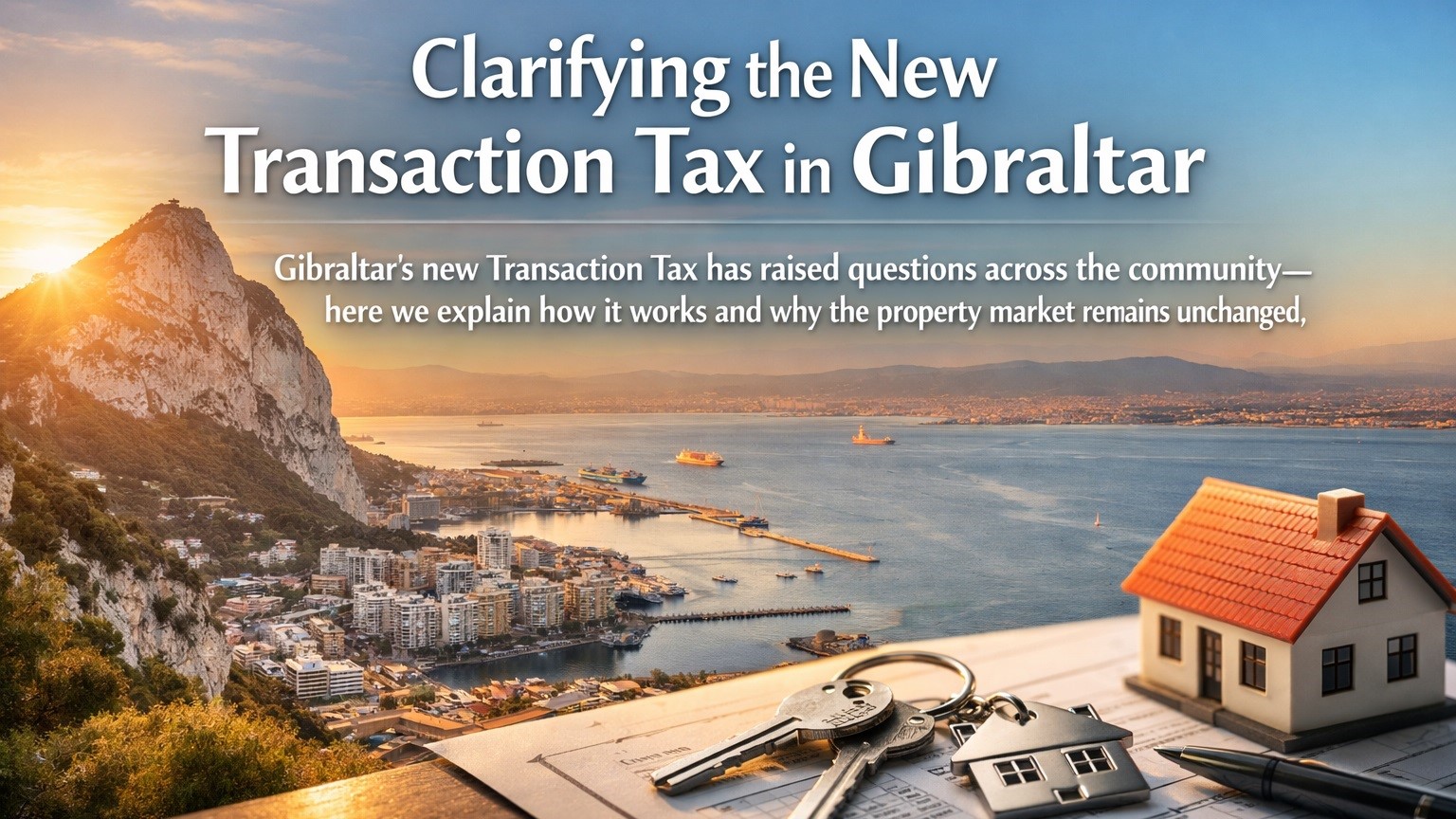
Recent announcements about the introduction of a new Transaction Tax in Gibraltar have generated significant interest among residents, investors, and property buyers alike. As the territory moves toward implementing the new system, many people have understandably asked how it will affect everyday life and whether it will have any impact on the local property market.
For estate agents and prospective buyers, understanding the changes is essential. While the new tax is an important development in Gibraltar’s economic framework, it is also important to clarify what it does—and does not—affect, particularly when it comes to property transactions.
Why Gibraltar Is Introducing a Transaction Tax
Gibraltar has traditionally operated without Value Added Tax (VAT), making it unique in Europe and one of the reasons why goods have historically been cheaper on the Rock. However, as part of the long-negotiated post-Brexit arrangements between the United Kingdom and the European Union, Gibraltar has agreed to introduce a Transaction Tax on goods as part of a broader economic framework designed to maintain a fluid border with Spain and facilitate integration with the wider European market.
The introduction of this tax is therefore not simply a fiscal decision - it forms part of a larger agreement aimed at securing long-term economic stability and mobility for Gibraltar residents and businesses.
How the Transaction Tax Will Work
The new tax is designed to replace Gibraltar’s existing system of import duties. Instead of different import charges being applied to certain goods entering the territory, a simplified Transaction Tax will apply primarily to imported goods.
The tax will be introduced gradually over several years:
-
15% from the first year of implementation
-
16% in the second year
-
17% in the third year
This phased approach is intended to allow businesses and consumers time to adjust, while also enabling the Government to monitor the effects on the local economy.
Importantly, the Transaction Tax will apply to goods rather than services, and it will generally be charged at the point of importation rather than at the point of sale.
Reduced and Zero Rates
As with VAT systems in many jurisdictions, the new framework includes different rates depending on the type of goods involved.
Certain essential items will be subject to a 0% rate, including:
-
Basic food products
-
Water and electricity
-
Medicines and pharmaceutical supplies
-
Books and educational materials
A reduced rate of around 5% will apply to selected goods such as children’s clothing, bicycles, and certain cultural or agricultural items.
This structure is designed to protect households from higher costs on essential items while still aligning Gibraltar’s system more closely with European tax standards.
What the Transaction Tax Means for Property Buyers
One of the most common misconceptions is that the new Transaction Tax will apply to property purchases. In reality, the tax does not affect real estate transactions.
Property purchases in Gibraltar will continue to be governed by Stamp Duty, which remains the primary tax payable when buying property on the Rock.
Current stamp duty rates vary depending on the property value and the buyer’s status. For example, first- and second-time buyers benefit from generous exemptions, with no stamp duty payable on residential properties valued up to £300,000.
For higher-value properties, the tax is applied progressively, with rates increasing for properties above certain thresholds.
The key takeaway for prospective buyers is clear: the new Transaction Tax will not increase the tax payable when purchasing property in Gibraltar.
Estate Agency Services Remain Untaxed
Another point worth clarifying is that estate agency services themselves are not subject to the new Transaction Tax.
Because the tax applies to goods rather than services, professional services such as estate agency fees, legal advice, and property management remain outside the scope of the new system. This means that clients selling or letting property will not see any additional tax added to estate agency commissions or service fees.
In practical terms, this maintains the simplicity that Gibraltar’s property sector is known for. Buyers and sellers can continue to work with estate agents in the same way as before, without any new tax being applied to those professional services.
Indirect Effects on the Property Market
Although the Transaction Tax does not directly apply to property transactions, it may have indirect economic effects that are worth considering.
Firstly, the introduction of the tax is part of a broader agreement designed to maintain an open and fluid border with Spain. Continued ease of movement between Gibraltar and neighbouring regions is expected to benefit businesses, workers, and investors alike.
Secondly, economic certainty plays an important role in property investment. Progress toward a stable long-term relationship with the European Union may help increase confidence among international buyers who are considering Gibraltar as a place to live, work, or invest.
Finally, the Government will monitor the tax’s impact on prices and cross-border trade to ensure that Gibraltar remains competitive relative to neighbouring regions.
Gibraltar’s Competitive Property Market
Even with changes to indirect taxation, Gibraltar continues to offer several advantages that make it an attractive property market.
These include:
-
No VAT on property transactions
-
Competitive stamp duty structure
-
No tax on estate agency services
-
A stable legal and regulatory framework
-
Strong demand for residential property
-
A strategic location between Europe and the United Kingdom
For many buyers, particularly those relocating for lifestyle or business reasons, these factors remain far more significant than the introduction of a tax on imported goods.
What Buyers and Sellers Should Keep in Mind
For anyone considering purchasing property in Gibraltar, the key points to remember are:
-
The Transaction Tax applies to goods, not property.
-
Stamp Duty remains the primary tax on real estate purchases.
-
Estate agency fees and other professional services are not affected.
-
First- and second-time buyers continue to benefit from generous exemptions.
-
The wider treaty framework aims to support long-term economic stability.
As with any financial decision, buyers should always seek professional advice to understand the costs involved in a property purchase. However, the introduction of the Transaction Tax does not fundamentally change the structure of property taxation in Gibraltar.
Looking Ahead
The implementation of the Transaction Tax marks an important milestone in Gibraltar’s evolving economic landscape. While it represents a shift in how goods are taxed, its purpose is ultimately to support broader economic integration and long-term stability.
For the property sector, the outlook remains positive. Gibraltar continues to offer a unique blend of lifestyle, legal certainty, and investment potential that attracts buyers from around the world.
As the new system is phased in over the coming years, the key message for property buyers is reassuring: the fundamentals of purchasing property in Gibraltar remain unchanged.
If you would like further guidance on buying or selling property in Gibraltar, our team would be delighted to assist with expert advice tailored to your individual circumstances.
Disclaimer: This article is provided for general information purposes only and does not constitute tax or financial advice. Richardsons recommends that readers consult a qualified local tax advisor or professional to discuss their individual circumstances before making any financial or property-related decisions.